Emily Writes

Category: Loneliness

  • The Hidden Danger of Following Influencers—How it Mimics Connection and Exacerbates Loneliness

    The Hidden Danger of Following Influencers—How it Mimics Connection and Exacerbates Loneliness

    For many of us who haven’t left the house or socialized in a while, we subconsciously use social media as a coping mechanism. I know the times I got really antsy, I was quick to open up a social media app to see what people were doing in the rest of the world. The premise of social media was to facilitate connection between people who did not have the means to interact with each other physically. Recently, I began wondering if social media could truly substitute for in-person socialization, and whether it could realistically remedy any feelings of loneliness we may be experiencing. The question kept popping up: Are these real connections we’re forming when we interact with strangers, particularly influencers, online? Although research is in its infancy, new studies suggest that having a sense of connectedness online may not offer relief from social isolation in our real worlds. This essay will examine the social and psychological repercussions of engaging with influencers specifically, where connection is imitated to generate income, thereby perpetuating a cycle of loneliness. 

    Loneliness is the uneasy feeling that results from the absence of meaningful connection with people in our social networks. If I haven’t spoken to anyone all day, seeing faces through a screen almost feels like being surrounded by people. When a content creator goes live on TikTok, it resembles being on a FaceTime call with someone you’re close with. They may have responded to your comment or answered your question. Now you’re besties. When you comment on a post or video and receive a reply, it gives the impression of striking up a conversation with a stranger. Watching a life update video from your comfort YouTuber feels like catching up with an old friend.

    As we know, influencers are online personalities who earn a living by promoting products from companies that have sponsored them. They can be quite competent in piquing product interest among their viewers. But I’ve come to realize that influencers are not just people; they’re brands. When influencers have established trust and rapport with their audience, we are more likely to be swayed by their opinions and recommendations. Their success is grounded in portraying themselves as regular people and maintaining a reciprocal relationship with us, which makes their product reviews feel more authentic. We purchase products from brands they have partnered with, which accounts for the bulk of their earnings, resulting in a financial gain for the company as well. 

    This effect is enhanced through the forging of parasocial relationships, which play a vital role in increasing visibility and following. We are falsely convinced we know influencers on a deep level. I’ve noted influencers reveal very few personal details about themselves, as I don’t believe sharing this with hundreds of thousands of strangers comes naturally to most. Instead, they share much of what they do throughout the day, or general activities they participate in. This feels intimate, as if you’re actually hanging out with them. It’s sufficient for them to maintain their devotees. Given the nature of this strategy, our desire for connection and vulnerability is preyed upon.

    Despite the illusion of closeness, these interplays are one-sided, lacking depth and individual acknowledgment. There are characteristics unique to face-to-face communication that are not conveyed through online interactions, such as physical contact, body language cues, tone of voice, and facial expressions. These offer us greater emotional support, heightening connection, and acting as a shield against loneliness. Fundamentally, our essential needs are not being met with digital contacts. Thus, the cycle of loneliness is fueled.

    Another way we may be suffering from watching influencers is by enduring a fear of missing out. FOMO comprises anxieties and insecurities stemming from missing out on possible enjoyable social events or not being in the know about them. Influencer culture exacerbates FOMO, as we feel compelled to stay up-to-date with the affairs taking place in an influencer’s life. We were led to believe watching influencers would provide us with some advantage or social support, but in fact, it makes us feel inadequate, often without us registering it. 

    We subsequently act on these feelings, as FOMO is related to consumer behavior. Essentially, we become burdened by a strong desire to consume products to feel like we belong to a distinct group. Purchasing a viral product can make us feel like we’re part of an online brand community. We want to share our experience of using the product with others, perhaps leaving a review to feel even more part of the club. This habit appeals to our need to foster a sense of belonging and maintain social connectedness, but often falls short of expectations, as it’s functionally a marketing scheme.

    If you’d like to hear an argument in favor of influencers, I’d tell you that work is work, and we all have to make our coin somehow. For most of them, the job fell into their laps and was not something they aspired to. They merely transformed it into a living. Hardly anyone could have predicted this would be a viable career even twenty years ago. Ironically, influencers may be encountering the same loneliness and disconnect they bolster under such a system. They could conceivably be deficient in worthwhile connections with the people in their lives and seek validation from their fans. Irrespective of their intent or how they chose to navigate their success, the damage persists.

    All this culminates in something severe. We neglect real-life connections in favor of virtual ones. Most of us come home after a long day and catch up on what we’ve missed online while we were away. Plenty of us are guilty of spending more time keeping up with the lives of strangers through a screen than the lives of people around us. Why should influencers take priority over our close acquaintances and family members? It’s especially stressful being on the receiving end of this harmful practice, as I crave nothing more than to connect with the people around me, but they have been conditioned to crave scrolling. 

    There are safer ways to use social media. I decided to quit appearance-based social media. I advise against watching anyone whose content revolves around themselves and their daily life. Specifically, creators whose work centers on their image and persona. I only watch accounts and channels that have something truly beneficial to offer. I steer clear of purely entertaining content and curate my feeds to be informational, educational, and reflective. I also began to scroll more cautiously. If any anxious feelings surface or if I see something that makes me feel bad about myself, I immediately log off, because I deserve far better than that. These small changes helped me, and they can be a starting point for you too.

    Life does not happen through a screen. Social media offered us a “solution” to loneliness, but I’m rejecting it. We can all gain from being more aware of our potential emotional connection with influencers and the adverse impact it can have on our well-being. Interactions with influencers do not hold a candle to real-life, face-to-face connections. While a pleasant exchange on social media is not entirely insincere, it pales in comparison to an act of kindness performed in person. The proof is in the way I’m far more likely to remember what happened to me in the flesh. Anything that occurs online is intangible and does not evoke as much emotion. Because of this, it hardly ever sticks with me. Put simply, real-world connection keeps us going.

    Further Reading

  • Admit It: We All Hate Driving—A Commentary on the Isolating Nature of Cars

    Admit It: We All Hate Driving—A Commentary on the Isolating Nature of Cars

    In my previous post, I discussed how life in the suburbs can be quite lonely. I deliberately glossed over a major structural component of the loneliness epidemic, believing it merited an entire post on its own. Driving a car, something many of us do daily, is another way we may be experiencing social isolation. While driving a vehicle may not be the inherent issue, a problem arises when the majority of America’s infrastructure is car-dependent. The automotive industry has played a profound role in shaping our lives, particularly in the American suburbs. This essay will function as an observational piece, a continuation into my exploration of the loneliness epidemic as I attempt to consider every angle. In lieu of an academic argument or policy proposal, I will share how I arrived at the conclusion that being obligated to drive contributes to the problem, drawing from lived experience. 

    Something always seemed off within me each time I got behind the wheel of a car. I recall particularly lonely drives home from work, where I yearned for a conversation with a stranger but was barred from doing so because I was in a vehicle. At last, it registered with me that cars function as isolation pods. When you are driving, you’re virtually cut off from much of the world, prevented from interacting with others. We are inside a cage made of glass and steel, sealed away from a lot of society. It can feel dehumanizing. 

    To better understand, let’s scrutinize the power dynamics involved in owning and operating a car. At its core, a car is your private property. I can’t think of any other instance where you bring this valuable of a belonging out with you in public. It’s akin to a house on wheels. You regulate the temperature, control the music, and lock your doors to keep people out. You allow a small number of carefully selected and trusted individuals into your home, just as you would with a car. Thus, driving your vehicle is moving this highly personal, selective, and protected thing through public spaces. Not only is it inconducive to human interaction, it creates a dissonance in our state of mind. There will be a hundred people occupying the same area, i.e., roads, and yet they will not have the opportunity to reach out to one other. The sense of disconnection that comes with car ownership is deep.

    Hence, car dependency can take quite a psychological toll. There are various consequences associated with driving, most of them dire. For starters, having to keep track of your car keys so you do not end up stranded. Figuring out the parking situation is another stressor. And, of course, car expenses are far and away the most significant reason people are so cautious about their vehicles. This encompasses loans, insurance, gas, and repairs. They advise against leaving valuables visible in your car, but your car is the valuable. That is tens of thousands of dollars being left alone in a lot somewhere. It creates a persistent feeling of anxiety that something can happen or go wrong with their cars at any time, which keeps people unhappy. Every drive quietly fills us with dread. A car is a dear to your heart, high-stakes machine you must guard. 

    How many times did plans fall through with friends when you wanted to travel somewhere that was a further distance? How many times have you been forced to leave a function early, being mindful of traffic? Who here couldn’t enjoy themselves during a gathering because they knew they had a long drive home? I don’t perceive these as minor inconveniences but rather, immense loads that take away from the occasion when I’m meant to be having a good time. It steals my joy. There are several factors to consider, each holding sizable weight, when deciding whether you’re willing to make that drive. You can’t criticize me for not wanting to undertake them. A car is an inhibitor. It’s a battle I face each time I contemplate stepping out the door. 

    Furthermore, the logistics of going out for a social drink in particular are a considerable source of stress. I don’t want to burden anyone by making them the designated driver, and I’m not keen on spending all my money on Ubers. Each option involves a car, turning what should be an enjoyable and spontaneous outing into a trying situation, making me contemplate whether it’s even worth it. Car dependency has repercussions for how often we see friends and meet new people.

    Car commercials and advertisements attempt to sell a fantasy, that a car is a beacon of freedom. Driving alongside lush scenery, with the message: “You can go anywhere.” Be that as it may, this is contrasted with the actual mental strain of freedom becoming compulsory. I fail to see how owning a vehicle can be considered a liberty when you are hardly given any other viable options for transportation and can get practically nowhere without one. The cognizance of the true price of car ownership is a sobering one.

    Anytime I’m on vacation, one of the biggest things I revel in is not having to worry about a car. It’s liberating not being tethered to a 4,000-pound machine. Simply put, it’s fun being able to walk around, take in the sights, and smile at passersby. There’s a certain peace to it. The times I’ve traveled to denser cities, one of the highlights is utilizing the public transportation system, something I’m not afforded in the suburbs. I appreciate a long bus ride surrounded by people on the same journey. I can’t help but wonder, why can’t we live this way more? In spite of this, cars took precedence over humans when many of our cities were designed.

    I admit there is privilege in being able to drive and having access to a vehicle. See, someone like me can quit complaining about these so-called “lonely” feelings, hop in my car, and drive. But I think about the people who aren’t able to drive and how even more isolated they become. Those who have aged out of driving. Teenagers and children. People with disabilities. Those who cannot afford to take on the financial burden of a car. What happens to them? They become trapped, essentially, when they’re under the heel of others for transportation. Simple tasks like picking up groceries, seeing the doctor, or cashing a check can become an ordeal. Their world becomes smaller, and loneliness can set in quickly. It’s unjust they are hardly given alternatives when they need it most.

    Similar to how some may prefer a life in the suburbs, some may favor the solitude a car offers, not experiencing the social isolation I described. Some are not keen on interacting with others when traveling to their destination. It’s the system that works best for them, and that’s entirely valid. My intention is not to convince you that your car makes you feel any type of way. I’m not declaring that no one should drive. The problem isn’t only cars, but notably, the lack of options. Admittedly, it’s difficult for even me to conceive of a different system when the automobile has been a dominant part of American culture and, subsequently, our lives. 

    I’m no urban planner. I don’t possess the qualifications to redesign an inefficient and morally questionable transportation system. I merely paid attention to what was making me feel lonely; things many of us had accepted as the norm. I wanted to highlight a key issue with the way we live our lives, as I believe it’s negatively impacting us more than we know, and may have lasting effects. Car dependency resulted in a society where connection and community, a critical part of our well-being, were sacrificed. I want owning a car to be a personal choice, not something we must rely on. I want us to be able to walk and use public transportation if we desire to, anywhere we are, to get to essential places. I’m calling for us to be imaginative, considerate of those who would benefit from a different system, and to ask for more.

  • Tales of a Single Young Adult in the Suburbs: Learning Loneliness

    Tales of a Single Young Adult in the Suburbs: Learning Loneliness

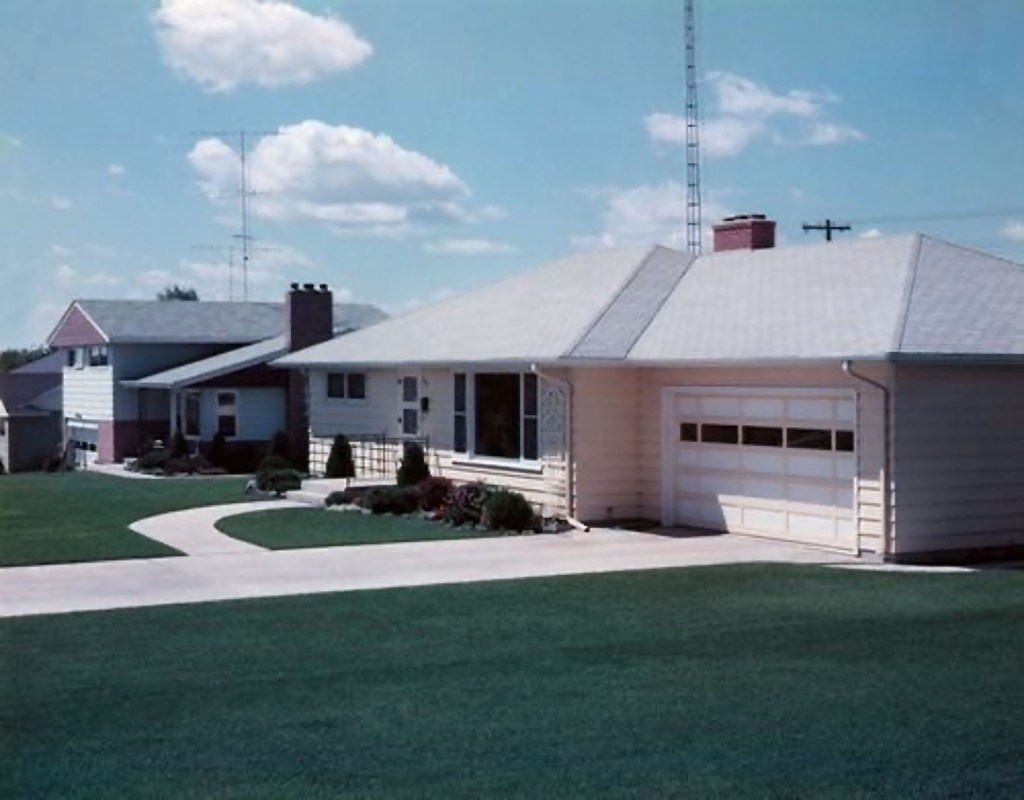
    The simple act of being a 10k-step girly radicalized me. Bear with me. When I started going on daily walks a couple of years ago, mostly for health benefits, I never expected it to completely upend the way I view the systems we have in place. During my hour-and-a-half long walks, it was common for me not to encounter a single person to say hello to. I would consider myself lucky if I came across two people to greet. Instead of hearing people, I could only hear the sound of cars driving past me, and you can’t exactly interact with that. It evoked feelings of uneasiness. This essay will not center on the historical and political context of American suburbs. Rather, it will serve as a reflection of one person’s experience living in the suburbs, how I realized their association with loneliness, and our greatest loss within suburbia: connection.

    We’ve all heard it before: humans are social creatures. It’s an essential component of our biology and thus, our survival. Positive social interactions keep us happy. When I walk this distance and see so few people outside, it leaves me craving more. I want to see faces and spontaneously encounter strangers. When these possibilities vanish, something feels wrong inside me. These experiences led to some critical questions: Were humans meant to live like this? Were the streets intended to be this underutilized and quiet most of the time? Where is everybody? 

    First, it’s crucial to provide a brief background of American suburbs. Single-use zoning requires commercial, residential, and industrial buildings to be separated from one another. It has been the prevailing form of land use regulation in the U.S. This restricts residential areas, such as single-family homes and apartment buildings, from being broken up by places like grocery stores, shops, restaurants, schools, banks, etc. Places and services that people regularly need access to were placed just beyond feasible walking distance, all but guaranteeing the purchase of a vehicle for every adult. I speculate that connection and accessibility were never the primary considerations when suburbs were designed; consumption was. This blueprint is conducive to social isolation, which helps explain why the streets are consistently devoid of people during my walks.

    The differences become even more striking each time I visit a major city. I can’t help but be in awe at how different life can look depending on where you live. The built-in environment in cities encourages connection. Tenants in the same apartment building often know each other well and frequently lend a hand to one another. You take a couple of steps outside your home and find food, coffee, shops, and plenty more. Corner stores are situated in the heart of neighborhoods, ready when you’re in a pinch. In my parents’ home country of Mexico, every community and neighborhood, both urban and rural, is equipped with a tiendita or “little shop.” Even they saw the need for and benefit of it. For lack of a better term, I’m mind-blown at the fact we were afforded exactly none of this in the suburbs, and I envy the convenience. The contrast is stark, and it raises questions about the possibilities for our communities. 

    Further, I’ve noted the rise of home surveillance systems over the last decade or so, and how this can also sever connection. It seems virtually every house is monitored by a camera system, or at least is the case in my neighborhood. In theory, the cameras are for safety purposes. In practice, with a large emphasis on family and property in the suburbs, home surveillance systems send out the silent message: keep out and don’t try anything. When I walk past certain houses, some of their cameras have a motion-activated feature that says, “You are being recorded right now.” Signs in windows that say, “Smile, you’re on camera.” It’s smiling through gritted teeth. I don’t suspect crime deterrent to be the priority; it’s about exclusion and boundaries. The neighborhood watch reports anyone suspicious, but I view it as quiet judgment of anyone who seems any bit different and therefore, untrustworthy. Fear and surveillance cosplaying as caring for your community. I wonder how many people’s cameras I showed up on during my walk. A thousand? The thought makes me shudder.

    Suburbanites often fail to discern what is required of real community: vulnerability, trust, and shared spaces. It’s reliant on people being open to getting to know someone who may not conform in lifestyle or appearance. They are robbing themselves of a chance to learn something from them by being reflexively distrustful. Admittedly, simply waving hello to someone does not suffice for me. True community is built by forming rapport with our neighbors. It’s about establishing relationships, understanding one another, and creating a sense of belonging. It’s a goal worth aiming for, and it can make a palpable difference in the way we live. 

    I’m not telling you to move to the downtown of a major city. Indeed, there are people who thoroughly enjoy their lives in the suburbs and prefer this model, and that’s acceptable. I cannot force somebody to be upset about a system they have no issue with for themselves. I am not here to convince you that your surroundings are making you miserable. I’m asking for options we were not given. I’m requesting for those of us with different preferences to be accommodated, just as suburbanites were. It’s not an either/or situation. We can design suburbs in a way that offers convenience and opportunities for connection while maintaining the tranquility that attracted many to them in the first place. People can still have space and perceived safety without being isolated. 

    I walk all this distance, wanting to see society and wanting to be seen, but such a privilege is not granted in the suburbs. I had been lonely for a long time without realizing it. I was unaware of how systematic this social deprivation was. If there’s one sentence that can convey my feelings, it would be: I’m overwhelmed by a desire to connect but underwhelmed with the options I have. We must be willing to envision other ways of life after recognizing how much the setting we’re in affects our well-being. We can update our zoning laws, enter a new era of urban planning, and redesign our cities. Even if it doesn’t happen in my lifetime, it’s worth shedding light on the problem and acknowledging we deserve better.