Emily Writes

Blog

  • Social Media’s Role in Dopamine Dysregulation: What This Means for Our Hopes and Dreams

    Social Media’s Role in Dopamine Dysregulation: What This Means for Our Hopes and Dreams

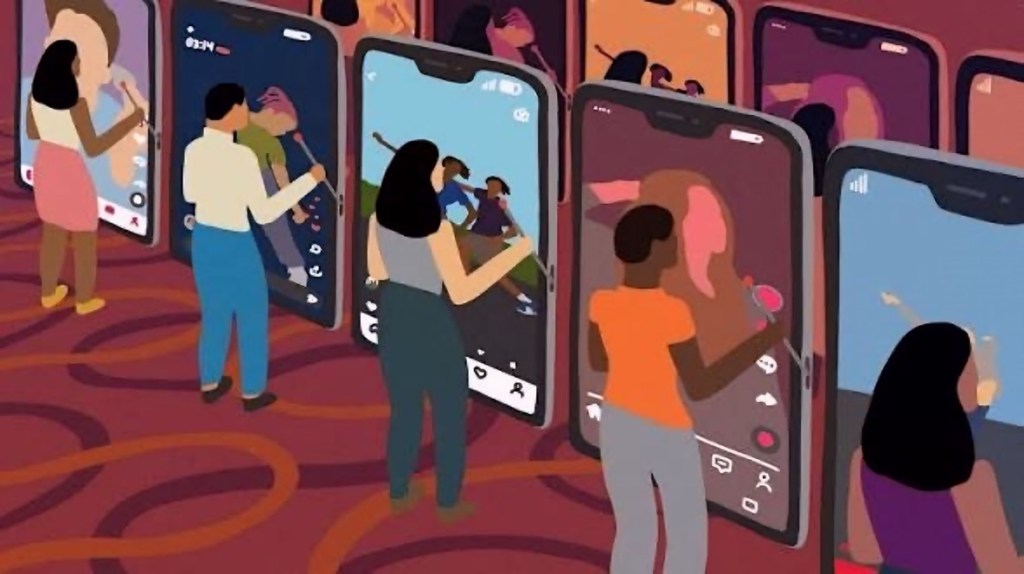
    Why do so many of us go through hell when we have fairly simple tasks ahead of us, such as unloading the dishwasher or folding laundry? Have people always struggled this hard with having the necessary discipline to complete chores? The answer to these questions has much to do with social media’s domineering presence in our lives. 

    In my previous blog, I discussed how social media’s intentionally designed addictive features have played a substantial role in dopamine dysregulation due to the minimal effort required on our part to receive never-ending rewards. When we have become so accustomed to instant gratification through social media use, our ability to develop self-discipline is deeply hampered. This helps explain why a lot of us find it unbearable to tackle unexciting, time-consuming, yet equally significant undertakings. Thereafter, this has greater repercussions for attaining our more consequential and long-term goals. If we can’t do the small things, how can we be expected to achieve anything bigger?

    Each time we open a social media app with the intention of quickly checking in, we frequently find ourselves stuck in the same spot for hours, neglecting and procrastinating essential responsibilities. We prefer to receive our satisfaction right away, which is precisely how social media’s blueprint keeps us hooked. The fact that social media is almost entirely dedicated to leisure and entertainment is another contributing factor. This makes it more desirable to real-life conflicts, decreasing productivity in the process. As a result, devoting oneself to common routines feels insurmountable. It is exceedingly difficult for individuals to invest time and effort into achieving genuine and lasting contentment.

    Let’s use the example of cleaning our entire room. Our brain and body resist putting time and energy into this labor because we could simply open any social media app and obtain a similar reward-like feeling. We have been trained to take the easy way out. We will choose the path that demands the least amount of effort to reward us, even if it’s worse for us in the long run.

    Confessedly, it’s something I still grapple with. I used to fear I had undiagnosed ADHD. The prospect of a task would fill me with dread. Social media would have a magnetic pull on me, being the much more enticing option. Even today, I try to set aside time to work on job applications, but it sometimes feels impossible when Reddit is right there.   

    This brings us to the critical distinction between rapid and slower dopamine releases. The dopamine release from cleaning your whole room happens much more steadily, coming at the end of the process, when you can see the product of your hard work. Carrying out obligations like these is rewarding, but it doesn’t follow the fast reward cycle that social media exploits. This makes it borderline intolerable to embark on endeavors that delay gratification and help to form healthy habits.

    If there’s one thing to take away from this, it is that gradual, effort-based dopamine releases are more valuable. This type of dopamine offers more stable and long-lasting satisfaction and is linked to enhanced well-being. It leads to increased long-term success both personally and professionally, and promotes continuing fulfillment. 

    The effects of consistently picking the most comfortable avenue compound over time. It’s a lot more than skipping everyday duties. All these years of poor self-control and underdeveloped habits add up to many missed opportunities. With social media dependency and hijacked dopamine, how are we supposed to achieve major life objectives? For instance, hitting a milestone in your savings account. Having enough money to travel, move to the city of your dreams, or put a down payment on a house. Advancing in your career. Completing an education. Getting your dream body at the gym. Finishing a book. The issue is that these things necessitate sustained attempts, but we wish for the pleasure now. Our aspirations for ourselves may be over before they begin. 

    It’s worth noting that this problem often starts from the moment we wake up, as the detriment of checking social media first thing in the morning is evident. The explanation is as follows: Our brain’s supply of dopamine is untapped in the morning. Using social media before getting out of bed gives us dopamine hits without any exertion, depleting much of it before we have the opportunity to use it for more important actions. This practice impairs our capacity to find joy in purposeful projects that are not immediately pleasurable. Essentially, we have scarcely any dopamine left over for the remainder of the day if we catch up on social media upon waking up. 

    Collectively, social media has eroded our capability to complete both daily labor and long-term ambitions. This is the outcome of social media serving as our primary source of dopamine for this amount of time; short and long-term discipline hardly stand a chance. I dread what this means for the rest of our lives; great things never worked towards, much less completed, because our dopamine was taken advantage of for decades. Exercising self-control to avoid frequent and shallow dopamine spikes is paramount now and may be the key to getting ahead and thriving.


    Social media’s disastrous consequences are so multifaceted and wide-ranging that they have warranted multiple blog posts on the topic. Coming off social media may seem daunting to most. However, merely knowing that you deserve to achieve your aspirations in life should be ample. I won’t have social media interfere with future hopes and dreams I have for myself, especially when I have concluded there is a trivial benefit to it, and a laundry list of reasons to quit. I won’t allow a worthwhile life to be involuntarily robbed from me. 
  • Social Media’s Addictive Features Explained: Dopamine Hijacking and the Parallel to Gambling

    Social Media’s Addictive Features Explained: Dopamine Hijacking and the Parallel to Gambling

    Apart from emotional turmoil, social media’s worst crime is its powerful, deliberate, and insidious addictive qualities. Social media developers cite entertainment and access to information as benefits of joining their apps. However, their primary intention is to keep you on their app as long as possible by taking advantage of our brain’s reward system. The methods employed to hijack our dopamine, including novelty-reward cycles and variable reward schedules, closely resemble techniques used to keep gamblers betting, raising urgent concerns. To better understand, let’s scrutinize the psychological precepts these platforms profit from.

    It’s essential to begin with an explanation of dopamine, or at least, a science-lite one. Dopamine is a transmitter and chemical messenger primarily associated with pleasure, reward, and motivation. Each time we participate in a rewarding behavior, our brain releases dopamine. Its function is to increase the occurrence of these activities through motivation. Our drive comes from the desire to repeat these pleasurable feelings, an evolutionary trait that prompts us to seek rewards for survival. 

    One significant way to trigger the release of dopamine is through exposure to novelty. Humans are strongly drawn to anything new. It’s an evolutionary adaptation, as it promotes the acquisition of information to aid in survival. By using social media, we are fulfilling this instinct by seeking out insight that could be valuable to us. Scrolling through your feed exposes you to incessant new people, videos, and vast swaths of information. Our brain instantly compares these details to our existing knowledge, and if they differ, dopamine is set off. This is called a novelty-reward loop, in use by almost all social media platforms. While learning new things is not intrinsically bad, social media capitalizes on this inclination. Our brains are bombarded with “newness” that is framed as imperative but rarely provides lasting value. 

    In tandem with novelty, social media sites wield a variable reward schedule. As we scroll, what appears on our feed is largely unpredictable. Notably, the brain has a built-in preference for uncertain rewards, releasing higher amounts of dopamine. Conversely, our brains are more accustomed to predictable rewards, such as the result of brushing our teeth and making our beds—it’s boring because we know what to expect. But social media ensures we are consistently subjected to unforeseen content. Dopamine also spikes more intensely if we don’t know when we’ll receive a reward. When we use social media, we can’t precisely predict if we’ll enjoy everything we see, making it far more captivating to use. Combined with the fact that it’s practically exertionless, just a scroll or a tap, it’s the simplest and quickest way to feel gratified.

    Social media applies various additive design features to deliver this fresh and unpredictable material. There’s nary such a thing as only checking social media briefly, as its carefully configured interface lures us in each time. Think infinite scrolling on apps like TikTok. Autoplay forcing you to watch videos until the end. Short-form content being especially digestible = a faster rebound rate = increased consumption. Algorithms are highly personalized based on the topics we’ve shown the most interest in. These characteristics create a pattern of craving, anticipation, and payoff, keeping us hooked without much effort or realization on our part.

    When each of these properties is rolled into one, they form a slot machine effect. With slot machines, you don’t win on each occasion but rather unpredictably. The prizes range from smaller cash payouts to a massive jackpot, enough to keep players pursuing successive wins. The pull-to-refresh mechanism on social media sites is eerily similar to pulling a lever on a slot machine. Will you see a relatable meme? A shocking viral moment? A hot take? Read a funny comment? Not everything on our feed will be entirely attuned to our entertainment. Nonetheless, we continue to use it, just for the mere possibility that we may score and discover something favorable to us, akin to gamblers betting again to chase the next win. Both scenarios facilitate compulsive use. 

    Social media exploits our brain’s yearning for novelty, unpredictability, and reward, mirroring slot machines. The byproduct is an uninterrupted cycle of suspense, expectation, and a prize. The most alarming part is how little effort all of this requires. Our brains are deceived into believing we have accomplished something each time we use social media. Over time, this low-effort stimulation can make us less receptive to real rewards that demand time and energy. Our brain’s reward system is now desensitized to anything that necessitates any more labor than simply looking at a screen, which is where the real trouble begins. In part two, I’ll explore what this means for our ability to develop self-discipline, and how this has greater repercussions for attaining our larger and more long-term goals. 

  • Airing Out My Grievances Against Social Media: The Argument for Quitting

    Airing Out My Grievances Against Social Media: The Argument for Quitting

    January 18th, 2025: TikTok went dark. Although short-lived, it was uncomfortable to see the number of people genuinely distressed over it. Even more concerning were the urges I got to open the app and scroll, and getting irritated when I couldn’t—eerily similar to experiencing withdrawal. Despite this, I was relieved to be freed from the app, albeit temporarily. I assumed most users agreed the app was harmful and we were likely better off without it, yet we were also hopelessly addicted. I viewed TikTok’s ban as a necessary action, or at least for me. 

    These events led to serious thoughts about the need for social media amidst its widely acknowledged ill effects on its users. Especially baffling is the fact most users are at least partially aware of the consequences but still consume in excess. Why do this to ourselves? When I tried to come up with a benefit I’ve gotten from using social media, I came up mostly blank. If I thought of something that could be framed as advantageous, I would debunk it almost instantly. The supposed positives—connection, attention, and entertainment—are part of a more nuanced and grim reality that influenced my decision to quit social media for good.

    The primary use of social media, at least in its advent, was for users to distribute updates, typically in the form of photos and videos, with friends and family. This is done to facilitate connection across geographic barriers. It can feel comforting to see what your loved ones are up to, specifically when you don’t see them as frequently as you’d like.  

    Except it’s not about providing life updates to family and friends. If that were the motive, wouldn’t you let them know firsthand, and not alongside vague and distant contacts? I don’t suspect most to be familiar with each of their followers. If something momentous were occurring in my life, I would want to let the important people in my life know through a text, phone call, or in-person visit. We do not need additional, unknown spectators online. Our best moments should be reserved for the people who truly matter, not the public. Discovering someone’s news online, such as an engagement, pregnancy announcement, or a big move, suggests you’re not close enough to have heard it directly from them. It’s an unfortunate circumstance, though not one that should be taken personally. 

    So, if not for life briefs and imagined intimacy, what is posting on social media really about? An even more unpleasant truth is that it’s often done for attention and social validation. It is challenging to resist sharing our high points with the world, but it mostly boils down to impressing others. Each time I posted a photo of myself that I felt I looked good in, it was because I craved praise and admiration. The likes, comments, and replies to my story felt like a drug. People “approving” of me fed my ego. That was the sole reason I partook in posting. It took a long time to become conscious of my intention and admit it to myself. 

    I knew this phenomenon was real when I noticed how quietly disheartened I felt when I didn’t get the feedback I desired. If my post flopped, I would have invasive thoughts, wondering if I looked as pretty as I thought I did. Do people still find me good-looking? Have I lost my audience of simps? Each time I posted a story, I would be glued to my phone, checking to see who had interacted, hoping to be affirmed in any way. It’s a detrimental practice to base your self-worth on recognition from others, especially on something as frivolous and shallow as the way you look.

    Indisputably, these behaviors stem from the unwavering societal emphasis on a woman’s appearance. Instagram and TikTok function like an unspoken beauty contest, particularly inside a woman’s social circle. Women are constantly making attempts at glowing up, trying to look more polished since the last time they posted, vying to look the prettiest they’ve ever looked.

    These experiences are not unique to me or any young woman online. As humans, we carry the tragic, permanent instinct to compare ourselves to others. I can confess that being exposed to beautiful women favored by the algorithm caused substantial injury to my self-esteem. It wouldn’t manifest as bitter envy, but rather as subtle feelings of inadequacy. I couldn’t help but wish I looked as good as they did. It’s something I surmise every woman can relate to, a sentiment that aches worse with social media.

    On top of the considerable toll it takes on our self-confidence, using social media makes us feel we are deficient in other capacities. It is common knowledge that social media is not a reflection of real life but, alternatively, a highlight reel. Profiles are carefully crafted self-portrayals. We almost exclusively share ourselves in worthwhile states, such as wearing make-up and being dressed up, as well as ventures like partying or traveling. So, when you log onto social media, you see the collective posts of every individual participating in pleasurable activities, leading you to believe everyone is doing something cool all of the time…except you. 

    Indeed, hardly anyone shares the unglamorous parts of their lives: working, rotting at home, not having any make-up on, and wearing pajamas. Most people would shudder at the thought of sharing an imperfect life or a photo of themselves where they don’t look flawless. I became displeased with this distortion, both in what I published and in the content I consumed from others. I was done being falsely convinced I was missing out, and feeling my life was dull in comparison.

    Posting yourself and your life online can also have the unintended outcome of feeling like all eyes are on you. For the record, I don’t presume I occupy much space in people’s minds; none of us do. Even if I did, my days of caring about other people’s judgment are long gone. With that said, having anything up on social media opens up the opportunity for someone to criticize you and what you’re doing. The possibility that anyone can think anything of your content at all times is unnerving. Even if it’s not said to me out loud, my brain was distracted by other people’s opinions of me, whether good or bad. Once again, I grew fatigued from this incessant, uneasy feeling that subconsciously weighed on me.

    “Lost time is never found again.” – Benjamin Franklin

    Given this lengthy list of disadvantages, one must ask, why spend any time on social media at all? Sad to say, many of us devote an inordinate amount of time to mindlessly consuming social media. We consistently emphasize how valuable time is, even more than money. Can you remember the last five TikToks you watched? We can likely only recall a small, insignificant percentage of all we ingest on social media. Social media’s positive impact is negligible at best, and the trade-off is nowhere close. Thus, it’s mostly in vain. It’s a waste of time—subsequently, a waste of life. 

    Squandering time and mental energy on social media is one issue; having a digital persona as a way we must present ourselves is another. Social media compelled us to have two sides to us: our real-life, in-person selves, and then our online selves. A profile we curate that’s meant to represent us, but isn’t actually us. The concept is less than twenty years old and remains experimental, not entirely natural. Enjoying the moment and savoring the experience is more than adequate. We don’t have to document anything; the ramifications are evident. Living and being are enough. 

    Upon this awakening, I decided I no longer wanted part in something so hazardous. I only move in silence, because a private, non-performative, authentic life offers far more peace. With our welfare on the line, I’m calling for people to think critically about their choice to use social media. Take cautious note of the emotions you encounter when scrolling and posting. In the final analysis, consider the potential costs to your health and happiness, and weigh them against whatever unlikely real benefit you receive from social media.

    Coda

    If you’re curious what a life without social media looks like, honestly, it’s pretty sweet. I don’t have to worry about getting the perfect photo, saving me time and energy. I don’t have to prove beauty anymore. I don’t need to establish that I went somewhere cool. I no longer stress about drafting posts and captions. There’s relief in knowing I’ll never experience the ill effects of social media again, simply because I decided I won’t subject myself to that pain. There’s no more performance. I live for me now. 

  • The Implementation Progress of 20-Minute Living in Portland, OR

    The Implementation Progress of 20-Minute Living in Portland, OR

    The 2012 Portland Plan was ushered in based on the fundamentals of prosperity, education, health, and equity. It was formulated in response to Portland’s issues deemed most urgent by city officials, such as income inequality, job scarcity, low high school graduation rate, and conservation concerns. The objectives are based on quantitative data on Portland’s neighborhoods, in addition to feedback from members of Portland’s community. Under the Portland Plan, targets were set for the entirety of the city, together with specific communities (City of Portland). 

    One strategy to emerge from the plan is the concept of the complete neighborhood. The initiative gained attention for being one of the first cities in North America to outline the concept of 20-minute living. The idea is for residents to have feasible access to a majority of their daily essential destinations through walking, biking, or using public transportation. Portland city officials have specified their desire to have “80% of its approximately 635,000 residents living in complete neighborhoods by 2035” (Vician, 2024). 

    One example of the Portland Plan in action is the establishment of public street plazas during the COVID-19 pandemic. Businesses and city dwellers were encouraged and aided in organizing events and activities in public areas. The aim was to promote inclusivity and vibrancy in the community. A typical street plaza consists of mobile amenities such as shaded picnic tables intended to foster socialization and relaxation while individuals enjoy coffee or meals. Originally meant to be temporary amidst the pandemic, the project was converted into an indefinite one in 2022. The most recent 2024 evaluation of the public plaza’s reception indicates strong public support, with “96% of survey respondents recognizing substantial community benefits” (City of Portland, 2024). 

    In addition to public gathering spaces, among the latest updates of the plan is a proposal to upgrade sidewalks in the east and southwest neighborhoods of Portland, which was adopted on May 7th, 2025, by the Portland City Council. The Portland Bureau of Transportation (PBOT) has alerted the public to the dilapidated condition of the majority of the city’s streets. Specifically, “172 miles of Portland’s nearly 5,000 miles of streets lack sidewalks either on both or one side of the street” (Zielinski, 2025). Portland approximates the execution of the work to cost $200 million over the course of four years. The plan does not outline how the revenue will be generated to cover the costs associated with the project. Alternatively, the city’s Finance Committee will be consulted to present a recommendation for how the sidewalk construction will be financed, with District 4 Councilor Mitch Green having proposed using bonds. 

    Further, upgrades delineated in the plan have also been met with some opposition at the local level. A portion of Portland natives cite concerns over displacement and gentrification. For example, the historically black neighborhood of Albina experienced these unintended consequences during the 1960s when the light rail line and highway constructions displaced residents, businesses, and homes. The Portland Plan acknowledges this history under a segment on gentrification. In essence, when the government invests in the development and growth of neighborhoods as outlined in the plan, wealthier residents often move into them, which can contribute to a higher cost of living. It can result in “involuntary displacements of residents and businesses that can occur as the result of rising property values, redevelopment, or land clearance” (City of Portland, 2012, p. 70).

    This history continues to influence a certain number of current residents. Portland local Matt Boyd had plans to open a church and buy a home close enough to walk to from there. He had hopes that his parishioners could walk to the place of worship and to each other’s homes for meetings. In three years, Boyd moved four miles away to a cheaper neighborhood that was in the process of being redeveloped, citing gentrification and an inability to buy in his former community. The Portland Plan acknowledges it is a challenge to “figure out how to provide all Portlanders with quality of life improvements while improving trust and confidence in local government without the negative consequences of gentrification and displacement” (City of Portland, 2012, p. 70). These concerns were identified during public forums, workshops, fairs, and meetings, which led to the plan designating a framework for equity. The emphasis is on “underrepresented Portlanders and communities fully participating and influencing public decision-making” (City of Portland, 2012, p. 18).

    Despite these potential threats, the Portland Plan is ongoing. It specifies 25-year goals and 5-year action plans, consisting of 142 actions. Teams to evaluate progress have been put in place while the City Council tracks progress. The most recent July 2025 project newsletter from the Bureau of Planning and Sustainability summarizes progress regarding the plan. Among the highlights was the RICAP 11 amending draft zoning codes to “remove barriers in order to streamline housing development across the city” (City of Portland, July 2025). Oversight currently occurs in the form of 5-year action plans to guide updates, which “establish near-term investment priorities and associated budgets in accordance with the plan” (Prosper Portland, 2024, p. 4). Moving forward, outcomes will be reliant on transparent evaluations, collaboration, and adaptation. These factors will be critical in addressing the city’s challenges and assessing the success of Portland’s long and short-term aspirations.

    References

    City of Portland Bureau of Planning and Sustainability. (2012). The Portland Plan [PDF], 18, 70. https://www.portland.gov/bps/planning/documents/portland-plan/download

    City of Portland Bureau of Planning and Sustainability. (n.d). The Portland Plan. Portland.gov. https://www.portland.gov/bps/planning/about-bps/portland-plan

    Portland Bureau of Transportation. (2024). About Portland’s street plazas. Portland.gov. https://www.portland.gov/transportation/planning/plazas/plazas 

    Prosper Portland. (2024, August 14). Resolution 7571 [PDF], 4. https://prosperportland.us/wp-content/uploads/2024/08/Resolution-7571.pdf

    Vician, T. (2024, February 8th). Walkable metropolis. World News Group. https://wng.org/articles/walkable-metropolis-1707015205

    Zielinski, A. (2025, May 7th). Councilors advance plan to improve sidewalks in Portland’s east and southwest neighborhoods. Oregon Public Broadcasting. https://www.opb.org/article/2025/05/07/councilors-advance-plan-to-improve-sidewalks-in-portlands-east-and-southwest-neighborhoods/

  • Stop Buying Things—The Impact of Consumerism and How a Simple Life Can Save You

    Stop Buying Things—The Impact of Consumerism and How a Simple Life Can Save You

    In the last few years, my household has averaged a couple of packages arriving at our front door each day. This consumerism in action was getting out of control, and I was inspired to write about it. It’s become a fairly normalized practice, especially among younger generations. I can’t imagine this to be healthy or productive. People love stuff, but how come? Why do we feel the need to make never-ending purchases? Consumerism has convinced us that our happiness and social acceptance are tied to our purchases, a process that has caused considerable damage to our well-being. In actuality, we grow as people and find joy not through our material possessions but rather our connections, which can be achieved through simple living.

    Research has shown that extraneous purchases do not increase our happiness levels after our basic needs are met. Further, the excitement from newly acquired items dissipates quickly. So, I’ve attempted to compile a list of reasons why we buy in excess. First, people upgrade their possessions to feel like they’re upgrading at least one feature of their lives. Certain individuals believe that acquiring items is synonymous with personal improvement. Instead of doing the inner work required to truly better ourselves, we update our products. Buying the latest gadget, beauty product, or trendy clothing item feels like self-care. We ensure our items are in working order rather than our mental health. 

    The desire to shop isn’t only a facade for advancing ourselves. Another key component to the rise of consumerism is retail therapy. I frequently see people joke that shopping is their coping mechanism, but all jokes have some truth to them. If there’s a minor inconvenience, they add items to their cart and proceed to checkout. We mistakenly believe buying things provides us comfort and fills a void by giving us something to look forward to. I view it as a control thing. We feel we have little to no control over certain aspects of our lives, but we can control the quality and quantity of our possessions. 

    Ultimately, material pursuits fail to compensate for our perceived flaws. We use it to make up for our shortcomings, but we are not truly evolving. This practice prevents us from confronting the real trouble in our lives. We’re more inclined to impress others with our possessions than with our best qualities, and who we are as people. 

    Accumulating too many items has negative consequences. Here’s the logic. Each item I own is something I must keep track of in my head. I have to be cognizant of where to store it, when to use it, how to utilize it, where to wear it, and how to dispose of it, among other considerations. As might be expected, this expends a great deal of mental energy. The more items I have, the more I’m bogged down.

    Naturally, the state of our habitat has a powerful impact on our emotional well-being. Living in a home that’s in disarray can engulf our minds. When you do away with physical clutter, you minimize mental overload. Your mind is freed up to attend to the more important things in life. For instance, I can prioritize my career and hone my craft as a writer. I find I have better ideas and can think more clearly when my living space is stress-free. My mood and emotional state are lighter and more positive. I can pursue activities or hobbies I’ve always wanted to. Subsequently, it allows me to be there for the esteemed people in my life. 

    Letting go of unnecessary items gives us more time and mental clarity to address the facets of our lives we feel we have lost control of. Minimalism diverts our attention and energy towards personal growth. An emphasis on possessions should not take precedence over nurturing our relationships, especially the one we have with ourselves. 

    These realizations did not come easily. The catalyst for these changes was a particularly rough period in my life some time ago. My solution was to eliminate everything unnecessary so I could focus on how to pull myself out of this place. I donated many items that were not serving me and clothes I no longer wore. With my well-being on the line, I couldn’t handle negative distractions. Anything that was not conducive to my success and healing got the boot.

    This stripped-down approach can be applied to the digital world, another thing we consume in excess. I recently deleted my Instagram and TikTok accounts. I don’t need to keep up with the lives of strangers through a screen. There’s no beef; I simply don’t want to feign friendship with people I haven’t talked to since high school. Additionally, I don’t watch influencers. I can only concentrate on what’s going on in my life. When I catch up with someone online and become aware of their struggles, it takes a little piece of me each time. Not interacting helps me limit mental expenditure. Most influencers who create online content are not offering anything substantial beyond entertainment. If I can’t think of anything positive I’m getting out of it, I won’t engage. 

    Even under minimalism, there are necessities we can’t avoid buying. It is not equivalent to deprivation; you can still own quality items. The essence is to consume mindfully. Minimalism is about living with the least amount of items necessary for you, and that looks different for everyone. I’m not advocating for you to get rid of most of your belongings, nor am I suggesting it’s possible to live without certain things. That’s for you to decide.

    Clothing addiction, in particular, was the issue for me. Even with this, I still use fashion as a creative outlet. However, I steer clear of impulse purchases and resist the temptation to buy a new outfit for every occasion. Now, I’ve equipped my wardrobe with fewer versatile pieces that can be mixed and matched to create a variety of outfits that stand the test of time. I also value quality skincare, makeup, and beauty products. Although, I don’t fall into the hype when a product goes viral and I get told I need it in my life. I finish all my products before considering a new brand, and I don’t have more than two of any one type of product. 

    This is not a beginner’s guide on how to get into minimalism, but I have some tips. I go by the saying, if it’s not broke, don’t fix it. Every item purchased is intentional and thoroughly researched. I carefully consider how much it will benefit me, often spanning the course of months or even years, for more consequential purchases. If I’m not dying without it, I can certainly wait to buy. 

    Yes, I was indeed a bona fide shopaholic in the past. My epiphany was this: Nothing physical, nothing tangible, no material possession, item, or object has ever made me happy. Happiness does not derive from that. To date, my family and close friends are the only things that have brought me joy. (Fine, you can throw in my pets). Connecting with people is all I need. I have never found solace in objects. They have never soothed any hardship I was going through. I’m comforted by connection.

    In short—and I don’t care if it’s corny—we should be content with what we already have. A simple life is a happy one.

    Further Reading

  • The Hidden Danger of Following Influencers—How it Mimics Connection and Exacerbates Loneliness

    The Hidden Danger of Following Influencers—How it Mimics Connection and Exacerbates Loneliness

    For many of us who haven’t left the house or socialized in a while, we subconsciously use social media as a coping mechanism. I know the times I got really antsy, I was quick to open up a social media app to see what people were doing in the rest of the world. The premise of social media was to facilitate connection between people who did not have the means to interact with each other physically. Recently, I began wondering if social media could truly substitute for in-person socialization, and whether it could realistically remedy any feelings of loneliness we may be experiencing. The question kept popping up: Are these real connections we’re forming when we interact with strangers, particularly influencers, online? Although research is in its infancy, new studies suggest that having a sense of connectedness online may not offer relief from social isolation in our real worlds. This essay will examine the social and psychological repercussions of engaging with influencers specifically, where connection is imitated to generate income, thereby perpetuating a cycle of loneliness. 

    Loneliness is the uneasy feeling that results from the absence of meaningful connection with people in our social networks. If I haven’t spoken to anyone all day, seeing faces through a screen almost feels like being surrounded by people. When a content creator goes live on TikTok, it resembles being on a FaceTime call with someone you’re close with. They may have responded to your comment or answered your question. Now you’re besties. When you comment on a post or video and receive a reply, it gives the impression of striking up a conversation with a stranger. Watching a life update video from your comfort YouTuber feels like catching up with an old friend.

    As we know, influencers are online personalities who earn a living by promoting products from companies that have sponsored them. They can be quite competent in piquing product interest among their viewers. But I’ve come to realize that influencers are not just people; they’re brands. When influencers have established trust and rapport with their audience, we are more likely to be swayed by their opinions and recommendations. Their success is grounded in portraying themselves as regular people and maintaining a reciprocal relationship with us, which makes their product reviews feel more authentic. We purchase products from brands they have partnered with, which accounts for the bulk of their earnings, resulting in a financial gain for the company as well. 

    This effect is enhanced through the forging of parasocial relationships, which play a vital role in increasing visibility and following. We are falsely convinced we know influencers on a deep level. I’ve noted influencers reveal very few personal details about themselves, as I don’t believe sharing this with hundreds of thousands of strangers comes naturally to most. Instead, they share much of what they do throughout the day, or general activities they participate in. This feels intimate, as if you’re actually hanging out with them. It’s sufficient for them to maintain their devotees. Given the nature of this strategy, our desire for connection and vulnerability is preyed upon.

    Despite the illusion of closeness, these interplays are one-sided, lacking depth and individual acknowledgment. There are characteristics unique to face-to-face communication that are not conveyed through online interactions, such as physical contact, body language cues, tone of voice, and facial expressions. These offer us greater emotional support, heightening connection, and acting as a shield against loneliness. Fundamentally, our essential needs are not being met with digital contacts. Thus, the cycle of loneliness is fueled.

    Another way we may be suffering from watching influencers is by enduring a fear of missing out. FOMO comprises anxieties and insecurities stemming from missing out on possible enjoyable social events or not being in the know about them. Influencer culture exacerbates FOMO, as we feel compelled to stay up-to-date with the affairs taking place in an influencer’s life. We were led to believe watching influencers would provide us with some advantage or social support, but in fact, it makes us feel inadequate, often without us registering it. 

    We subsequently act on these feelings, as FOMO is related to consumer behavior. Essentially, we become burdened by a strong desire to consume products to feel like we belong to a distinct group. Purchasing a viral product can make us feel like we’re part of an online brand community. We want to share our experience of using the product with others, perhaps leaving a review to feel even more part of the club. This habit appeals to our need to foster a sense of belonging and maintain social connectedness, but often falls short of expectations, as it’s functionally a marketing scheme.

    If you’d like to hear an argument in favor of influencers, I’d tell you that work is work, and we all have to make our coin somehow. For most of them, the job fell into their laps and was not something they aspired to. They merely transformed it into a living. Hardly anyone could have predicted this would be a viable career even twenty years ago. Ironically, influencers may be encountering the same loneliness and disconnect they bolster under such a system. They could conceivably be deficient in worthwhile connections with the people in their lives and seek validation from their fans. Irrespective of their intent or how they chose to navigate their success, the damage persists.

    All this culminates in something severe. We neglect real-life connections in favor of virtual ones. Most of us come home after a long day and catch up on what we’ve missed online while we were away. Plenty of us are guilty of spending more time keeping up with the lives of strangers through a screen than the lives of people around us. Why should influencers take priority over our close acquaintances and family members? It’s especially stressful being on the receiving end of this harmful practice, as I crave nothing more than to connect with the people around me, but they have been conditioned to crave scrolling. 

    There are safer ways to use social media. I decided to quit appearance-based social media. I advise against watching anyone whose content revolves around themselves and their daily life. Specifically, creators whose work centers on their image and persona. I only watch accounts and channels that have something truly beneficial to offer. I steer clear of purely entertaining content and curate my feeds to be informational, educational, and reflective. I also began to scroll more cautiously. If any anxious feelings surface or if I see something that makes me feel bad about myself, I immediately log off, because I deserve far better than that. These small changes helped me, and they can be a starting point for you too.

    Life does not happen through a screen. Social media offered us a “solution” to loneliness, but I’m rejecting it. We can all gain from being more aware of our potential emotional connection with influencers and the adverse impact it can have on our well-being. Interactions with influencers do not hold a candle to real-life, face-to-face connections. While a pleasant exchange on social media is not entirely insincere, it pales in comparison to an act of kindness performed in person. The proof is in the way I’m far more likely to remember what happened to me in the flesh. Anything that occurs online is intangible and does not evoke as much emotion. Because of this, it hardly ever sticks with me. Put simply, real-world connection keeps us going.

    Further Reading

  • The Issue With Modern Immigration Policy, From an Anthropological Lens: Humans Always Roamed

    The Issue With Modern Immigration Policy, From an Anthropological Lens: Humans Always Roamed

    Many of us observed the recent ICE raids and ensuing chaos unfold in the city of Los Angeles, and it is far from the first time immigration has been a source of contention. As a big-picture type of person, I’ve always looked at the broader implications of issues like these, taking into account the innate human behavior that drives such actions. Drawing from my anthropology education, I wanted to explore how we can connect the past and present, offering a viewpoint I don’t often hear discussed when addressing this topic. As I pay attention to the regressive immigration laws under the current administration, many questions arise. Have humans not always been nomadic? Is it not in our biology to roam? What does the recent phenomenon of borders and citizenship tell us? From an anthropological perspective, migration is vital for our survival and progression, but modern immigration policy has strayed far from our evolutionary instincts, criminalizing natural human behavior.

    The story of Homo sapiens is one that is defined by migration. Anthropology tells us anatomically modern humans evolved in Africa approximately 300,000 years ago and migrated out of Africa in waves to populate nearly every continent of the globe. The earliest fossils of our species residing outside of Africa are found in present-day Palestine, dating back to 194,000 years ago. Other groups made it across mainland Asia to southern China 100,000 years ago. From here, some members of our species ventured into Australia 60,000 years ago. Two separate sites in Europe, one in southern Italy and one in the UK, demonstrate the arrival of humans on the continent some 43,000 years ago. Lastly, North and South America were inhabited beginning between 15,000 and 20,000 years ago. These early treks set a precedent for what it means to be human: we are always searching for greater opportunities. 

    What prompted our species to cover a substantial amount of ground in a relatively short period of time? Variations in Earth’s climate, occurring roughly every 20,000 years, enabled the growth of lush vegetation between Africa and Eurasia, facilitating human migration. Science journalist Amanda Mascarelli states that “long periods of cold and dry inhospitable conditions closed the valve on migration. But when warm, moist, tropical conditions set in, they opened the valve, connecting adjacent regions that were previously out of reach.” Essentially, during ice ages, cold and dry environmental conditions made travel improbable. However, warm and wet periods would allow for the growth of grasses and shrubs, leading to the expansion of hunter-gatherer populations.

    It’s evident climate change caused our early ancestors to uproot. In our recent history, the dispersal of people can be attributed more to political, social, and economic factors that have pushed and pulled people out of their homelands. Migration is primarily driven by the anticipation of wealth gains and access to greater resources upon arrival. The shortcomings of one’s home country, including poverty, corruption, crime, or environmental disasters, are the most commonly cited reasons for emigration. The decision to leave is made after carefully considering the costs and benefits of travel.

    Irrespective of the reasons for leaving, human migration is behind many of our most remarkable discoveries. It has profoundly transformed human societies and civilizations, leading to significant breakthroughs in agriculture, weaponry, tool use, architecture, and numerous other fields. Where can we start? In the 8th century, Arab Muslims began migrating to the Middle East, North Africa, and the Iberian Peninsula. Referred to as the Islamic Golden Age, they spread Islam while also advancing literature, medicine, art, and mathematics. It was a five-century-long period distinguished by cultural and economic prosperity, with inventions like algebra and surgical tools still in use today. What about the Great Migration? From 1916 to 1970, six million African Americans moved to Northern cities in the U.S. to escape racial violence under an oppressive Jim Crow South. With them, they brought rich cultural traditions and a new labor force. The birth of jazz and blues music can be attributed to this event. This exodus completely reshaped American politics and society. When migration is not occurring on a large scale, innovation is limited. When people move, they bring their ideas. Travel introduces novelty to that region, which leads to flourishing.

    Now, despite migration’s extensive history and the documented advancements it brings, it is largely restricted by man-made barriers. Yet, historically, the purpose of borders was not always to keep people out. It is only relatively recently in our record that borders have been stringent and, as a result, frequently been the cause of violence. Interestingly, prior to the 19th century, borders were not clearly delineated and endured as unfixed and changing zones. Outposts did not rely on military presence to guard territories from external threats. Instead, such boundaries served administrative and economic purposes. For instance, various empires were more concerned with determining which groups of people needed to pay taxes, who would be provided with resources, and who could work as laborers. It was their method of solidifying internal power. Although borders are somewhat new, the urge to drift is not. 

    In contemporary times, America’s immigration system was not initially part of the state. The U.S. first introduced a closed border policy under the Immigration Act of 1924, which banned immigration from specific regions, including Asia and Southern and Eastern Europe. This subsequently led to the formation of the U.S. Border Patrol in the same year. The exclusionary nature of the law laid the groundwork for our current border enforcement model.

    What is the agency for strict border policies and an increase in deportations, such as those we’re seeing now? Inadequate due process, withdrawing visas, and racial profiling—how did we come to completely disregard our instinct to flee danger? Other than racism and unfounded xenophobia, I suspect it reflects political leaders’ desire to establish a portrait of austerity and control. Operating under these frameworks ignores science and defies empathy.

    Suppose you want to know how I really feel about this. In that case, I don’t care for arbitrary national affiliations they choose to impose on humans who have the right to roam the Earth—a characteristic of our kind that dates back 100,000 years. I regard borders as imaginary lines drawn in a dehumanizing effort to keep people out when we need others to survive, to help us. To make the decision to leave and walk further than what you’ve always known is a simple one, a characteristic that’s ingrained in each of us. What’s occurring in the present is clashing with our DNA. I care about the heart of a human above anything else. Moreover, there is no fundamental difference between humans from 300,000 years ago and humans today. The same instincts that drove them are driving us. To seek safer and more hospitable places, to adapt and survive, is a part of our history. Without it, our species may have faced extinction. 

    Some take the stance that the prevailing political environment is too sophisticated to permit free and unrestricted movement. You can contend borders are necessary for national security and aiding trade. However, this attitude lacks nuance. On the other hand, it would be naive and idealistic to believe that modern governance can be based exclusively on our evolutionary roots. How can we balance the two? Is there an ideal way to conduct migration flows today? I’m not calling for us to abandon structure. I believe in adopting a holistic and compassionate approach to immigration, one that honors humanity. It’s worth bearing in mind Article 13 of the Universal Declaration of Human Rights, which states “everyone has the right to freedom of movement and residence within the borders of each state.” Having this as a basis for the immigration landscape today could be a start. 

    Humans once walked across continents to survive. Today, at the hands of a cruel regime, some people aren’t able to step outside their homes without risking deportation and everything they’ve built, going against the very thing that makes us human.

    Further Reading

  • Admit It: We All Hate Driving—A Commentary on the Isolating Nature of Cars

    Admit It: We All Hate Driving—A Commentary on the Isolating Nature of Cars

    In my previous post, I discussed how life in the suburbs can be quite lonely. I deliberately glossed over a major structural component of the loneliness epidemic, believing it merited an entire post on its own. Driving a car, something many of us do daily, is another way we may be experiencing social isolation. While driving a vehicle may not be the inherent issue, a problem arises when the majority of America’s infrastructure is car-dependent. The automotive industry has played a profound role in shaping our lives, particularly in the American suburbs. This essay will function as an observational piece, a continuation into my exploration of the loneliness epidemic as I attempt to consider every angle. In lieu of an academic argument or policy proposal, I will share how I arrived at the conclusion that being obligated to drive contributes to the problem, drawing from lived experience. 

    Something always seemed off within me each time I got behind the wheel of a car. I recall particularly lonely drives home from work, where I yearned for a conversation with a stranger but was barred from doing so because I was in a vehicle. At last, it registered with me that cars function as isolation pods. When you are driving, you’re virtually cut off from much of the world, prevented from interacting with others. We are inside a cage made of glass and steel, sealed away from a lot of society. It can feel dehumanizing. 

    To better understand, let’s scrutinize the power dynamics involved in owning and operating a car. At its core, a car is your private property. I can’t think of any other instance where you bring this valuable of a belonging out with you in public. It’s akin to a house on wheels. You regulate the temperature, control the music, and lock your doors to keep people out. You allow a small number of carefully selected and trusted individuals into your home, just as you would with a car. Thus, driving your vehicle is moving this highly personal, selective, and protected thing through public spaces. Not only is it inconducive to human interaction, it creates a dissonance in our state of mind. There will be a hundred people occupying the same area, i.e., roads, and yet they will not have the opportunity to reach out to one other. The sense of disconnection that comes with car ownership is deep.

    Hence, car dependency can take quite a psychological toll. There are various consequences associated with driving, most of them dire. For starters, having to keep track of your car keys so you do not end up stranded. Figuring out the parking situation is another stressor. And, of course, car expenses are far and away the most significant reason people are so cautious about their vehicles. This encompasses loans, insurance, gas, and repairs. They advise against leaving valuables visible in your car, but your car is the valuable. That is tens of thousands of dollars being left alone in a lot somewhere. It creates a persistent feeling of anxiety that something can happen or go wrong with their cars at any time, which keeps people unhappy. Every drive quietly fills us with dread. A car is a dear to your heart, high-stakes machine you must guard. 

    How many times did plans fall through with friends when you wanted to travel somewhere that was a further distance? How many times have you been forced to leave a function early, being mindful of traffic? Who here couldn’t enjoy themselves during a gathering because they knew they had a long drive home? I don’t perceive these as minor inconveniences but rather, immense loads that take away from the occasion when I’m meant to be having a good time. It steals my joy. There are several factors to consider, each holding sizable weight, when deciding whether you’re willing to make that drive. You can’t criticize me for not wanting to undertake them. A car is an inhibitor. It’s a battle I face each time I contemplate stepping out the door. 

    Furthermore, the logistics of going out for a social drink in particular are a considerable source of stress. I don’t want to burden anyone by making them the designated driver, and I’m not keen on spending all my money on Ubers. Each option involves a car, turning what should be an enjoyable and spontaneous outing into a trying situation, making me contemplate whether it’s even worth it. Car dependency has repercussions for how often we see friends and meet new people.

    Car commercials and advertisements attempt to sell a fantasy, that a car is a beacon of freedom. Driving alongside lush scenery, with the message: “You can go anywhere.” Be that as it may, this is contrasted with the actual mental strain of freedom becoming compulsory. I fail to see how owning a vehicle can be considered a liberty when you are hardly given any other viable options for transportation and can get practically nowhere without one. The cognizance of the true price of car ownership is a sobering one.

    Anytime I’m on vacation, one of the biggest things I revel in is not having to worry about a car. It’s liberating not being tethered to a 4,000-pound machine. Simply put, it’s fun being able to walk around, take in the sights, and smile at passersby. There’s a certain peace to it. The times I’ve traveled to denser cities, one of the highlights is utilizing the public transportation system, something I’m not afforded in the suburbs. I appreciate a long bus ride surrounded by people on the same journey. I can’t help but wonder, why can’t we live this way more? In spite of this, cars took precedence over humans when many of our cities were designed.

    I admit there is privilege in being able to drive and having access to a vehicle. See, someone like me can quit complaining about these so-called “lonely” feelings, hop in my car, and drive. But I think about the people who aren’t able to drive and how even more isolated they become. Those who have aged out of driving. Teenagers and children. People with disabilities. Those who cannot afford to take on the financial burden of a car. What happens to them? They become trapped, essentially, when they’re under the heel of others for transportation. Simple tasks like picking up groceries, seeing the doctor, or cashing a check can become an ordeal. Their world becomes smaller, and loneliness can set in quickly. It’s unjust they are hardly given alternatives when they need it most.

    Similar to how some may prefer a life in the suburbs, some may favor the solitude a car offers, not experiencing the social isolation I described. Some are not keen on interacting with others when traveling to their destination. It’s the system that works best for them, and that’s entirely valid. My intention is not to convince you that your car makes you feel any type of way. I’m not declaring that no one should drive. The problem isn’t only cars, but notably, the lack of options. Admittedly, it’s difficult for even me to conceive of a different system when the automobile has been a dominant part of American culture and, subsequently, our lives. 

    I’m no urban planner. I don’t possess the qualifications to redesign an inefficient and morally questionable transportation system. I merely paid attention to what was making me feel lonely; things many of us had accepted as the norm. I wanted to highlight a key issue with the way we live our lives, as I believe it’s negatively impacting us more than we know, and may have lasting effects. Car dependency resulted in a society where connection and community, a critical part of our well-being, were sacrificed. I want owning a car to be a personal choice, not something we must rely on. I want us to be able to walk and use public transportation if we desire to, anywhere we are, to get to essential places. I’m calling for us to be imaginative, considerate of those who would benefit from a different system, and to ask for more.

  • Tales of a Single Young Adult in the Suburbs: Learning Loneliness

    Tales of a Single Young Adult in the Suburbs: Learning Loneliness

    The simple act of being a 10k-step girly radicalized me. Bear with me. When I started going on daily walks a couple of years ago, mostly for health benefits, I never expected it to completely upend the way I view the systems we have in place. During my hour-and-a-half long walks, it was common for me not to encounter a single person to say hello to. I would consider myself lucky if I came across two people to greet. Instead of hearing people, I could only hear the sound of cars driving past me, and you can’t exactly interact with that. It evoked feelings of uneasiness. This essay will not center on the historical and political context of American suburbs. Rather, it will serve as a reflection of one person’s experience living in the suburbs, how I realized their association with loneliness, and our greatest loss within suburbia: connection.

    We’ve all heard it before: humans are social creatures. It’s an essential component of our biology and thus, our survival. Positive social interactions keep us happy. When I walk this distance and see so few people outside, it leaves me craving more. I want to see faces and spontaneously encounter strangers. When these possibilities vanish, something feels wrong inside me. These experiences led to some critical questions: Were humans meant to live like this? Were the streets intended to be this underutilized and quiet most of the time? Where is everybody? 

    First, it’s crucial to provide a brief background of American suburbs. Single-use zoning requires commercial, residential, and industrial buildings to be separated from one another. It has been the prevailing form of land use regulation in the U.S. This restricts residential areas, such as single-family homes and apartment buildings, from being broken up by places like grocery stores, shops, restaurants, schools, banks, etc. Places and services that people regularly need access to were placed just beyond feasible walking distance, all but guaranteeing the purchase of a vehicle for every adult. I speculate that connection and accessibility were never the primary considerations when suburbs were designed; consumption was. This blueprint is conducive to social isolation, which helps explain why the streets are consistently devoid of people during my walks.

    The differences become even more striking each time I visit a major city. I can’t help but be in awe at how different life can look depending on where you live. The built-in environment in cities encourages connection. Tenants in the same apartment building often know each other well and frequently lend a hand to one another. You take a couple of steps outside your home and find food, coffee, shops, and plenty more. Corner stores are situated in the heart of neighborhoods, ready when you’re in a pinch. In my parents’ home country of Mexico, every community and neighborhood, both urban and rural, is equipped with a tiendita or “little shop.” Even they saw the need for and benefit of it. For lack of a better term, I’m mind-blown at the fact we were afforded exactly none of this in the suburbs, and I envy the convenience. The contrast is stark, and it raises questions about the possibilities for our communities. 

    Further, I’ve noted the rise of home surveillance systems over the last decade or so, and how this can also sever connection. It seems virtually every house is monitored by a camera system, or at least is the case in my neighborhood. In theory, the cameras are for safety purposes. In practice, with a large emphasis on family and property in the suburbs, home surveillance systems send out the silent message: keep out and don’t try anything. When I walk past certain houses, some of their cameras have a motion-activated feature that says, “You are being recorded right now.” Signs in windows that say, “Smile, you’re on camera.” It’s smiling through gritted teeth. I don’t suspect crime deterrent to be the priority; it’s about exclusion and boundaries. The neighborhood watch reports anyone suspicious, but I view it as quiet judgment of anyone who seems any bit different and therefore, untrustworthy. Fear and surveillance cosplaying as caring for your community. I wonder how many people’s cameras I showed up on during my walk. A thousand? The thought makes me shudder.

    Suburbanites often fail to discern what is required of real community: vulnerability, trust, and shared spaces. It’s reliant on people being open to getting to know someone who may not conform in lifestyle or appearance. They are robbing themselves of a chance to learn something from them by being reflexively distrustful. Admittedly, simply waving hello to someone does not suffice for me. True community is built by forming rapport with our neighbors. It’s about establishing relationships, understanding one another, and creating a sense of belonging. It’s a goal worth aiming for, and it can make a palpable difference in the way we live. 

    I’m not telling you to move to the downtown of a major city. Indeed, there are people who thoroughly enjoy their lives in the suburbs and prefer this model, and that’s acceptable. I cannot force somebody to be upset about a system they have no issue with for themselves. I am not here to convince you that your surroundings are making you miserable. I’m asking for options we were not given. I’m requesting for those of us with different preferences to be accommodated, just as suburbanites were. It’s not an either/or situation. We can design suburbs in a way that offers convenience and opportunities for connection while maintaining the tranquility that attracted many to them in the first place. People can still have space and perceived safety without being isolated. 

    I walk all this distance, wanting to see society and wanting to be seen, but such a privilege is not granted in the suburbs. I had been lonely for a long time without realizing it. I was unaware of how systematic this social deprivation was. If there’s one sentence that can convey my feelings, it would be: I’m overwhelmed by a desire to connect but underwhelmed with the options I have. We must be willing to envision other ways of life after recognizing how much the setting we’re in affects our well-being. We can update our zoning laws, enter a new era of urban planning, and redesign our cities. Even if it doesn’t happen in my lifetime, it’s worth shedding light on the problem and acknowledging we deserve better.

  • A Dwayne Hoover Character Study: What it Means to Come Around to Your Family

    A Dwayne Hoover Character Study: What it Means to Come Around to Your Family

    Dwayne Hoover is the Nietzsche-reading, voluntarily mute, aspiring jet pilot, angsty teenage son from the 2006 film Little Miss Sunshine. My favorite of all time! Is there a movie that did tragicomedy better? Has any character captured the pain of being a teenager better than Dwayne? The movie left me with many questions: Did Dwayne have a valid reason to “hate” his family? How much of it can we attribute to normal teenage angst, feelings everyone has toward their family at one point? This essay will explore Dwayne’s character arc and how he discovered a larger truth about family, resentment, failure, and coming of age. 

    Dwayne’s character arc largely centers on the perceived disconnect from his family. It’s heartbreaking how little of his true self his family knows about him, with the vow of silence serving as a mental checkout, only widening the gap between them. To exacerbate things, Dwayne already has one foot out the door, making it clear that once he turns eighteen and graduates high school, he will be out of there and likely won’t look back. Undertaking this vow of silence demonstrates Dwayne’s deep commitment and discipline toward becoming a jet pilot.

    Dwayne’s silence also acts as a shield he created to protest the family environment he has virtually no control over. He relates so little to his family members, he has all but entirely cut himself off from them. He has given them no access to the most precious and real parts of himself. Engaging with a shallow family dynamic would only leave him more disappointed, further contributing to his unhappiness. For Dwayne, silence became his boundary and survival mechanism. He knows there’s very little he could say to his family that they would understand. There’s a great deal of pain spanning several years that will take the same amount of time to resolve. Saying one thing to them won’t fix it, so why bother? 

    Although the film doesn’t delve much into it, a significant source of Dwayne’s discontentment could be the split between his biological father and mother, with Dwayne not living with or seeing his father as often as he’d want to. This can be a great source of pain for a child and may help explain Dwayne’s internal conflict. Throw in an unwanted stepfather who likely won’t ever understand him at his core, knowing there’s practically nothing he can do about it being a minor, and that’s how kids like Dwayne are created. 

    When Dwayne finds out he’s colorblind and, well, “you can’t fly jets if you’re colorblind,” he blows up and says some gut-wrenching things to his family, calling them out on their most egregious errors. “I don’t want to be your family, I hate you people! Divorce, bankrupt, suicide, you’re losers!” It’s a grim scene. He’s devastated over a lost dream, understandably. But where Dwayne redeems himself is moments after the blowup. Despite being a kid, Dwayne had the emotional maturity to apologize to his family, telling them he didn’t really mean the things he said.

    Dwayne was beginning to understand the complexities of people. His family did not exactly get to choose their circumstances. Life got to them too. Dwayne experienced an exponential setback similar to how each family member did during the events of the film. He was in the early stages of seeing how this could impact an individual and prevent them from being their best selves.

    Funnily enough, this movie did the impossible: it made me feel better about my family. It confirmed that every family is dysfunctional. Embarrassing. Flawed. Dwayne came to realize these are not true reasons to hate your family. He had a reasonably stable home and upbringing. The film certainly did not portray his family as abusive or neglectful. Their worst crime is not being emotionally attuned to Dwayne’s needs. It’s a difficult thing to get right. Despite our parents’ best efforts, they can’t always help us. There almost always seems to be a disconnect between parents and their children.

    A teenager doesn’t have as much awareness, emotional development, and sense of self the way an older person might. Young people are often told they know nothing, and I don’t believe this to be entirely untrue. A more accurate description I’ve landed on is this: the knowledge gained with time and experience reframes much of what you thought you knew. Dwayne feels misunderstood, but which young person doesn’t? Who here has never felt alienated from their family’s personalities, expectations, and who they fundamentally are as people?

    Dwayne may need to grow a little older to understand his family and their shortcomings better, but he was already on the way. He has strong convictions and is mulish, but he does not know everything, and there is a lot he’s going to learn in life.

    Despite referring to his family and home as “hell,” his care for them is evident. He helps steal the grandpa’s body from the hospital, respecting his stepfather’s decision on how to honor his father best. He tells Olive to hug their mom after their grandpa’s death, recognizing that she deserves support, even if he can’t offer this to her himself. He exchanges wisdom with Uncle Frank at the beach. He’s already evolving by being able to take advice from his uncle, reminding us that he’s not the stubborn and closed-off teenager we thought he was. And the grand finale: dancing with his entire family on stage to support Olive, clearly enjoying himself, and happy to be surrounded by an intact family. Despite conflicts, setbacks, and imperfections, they remain united.

    The film had me wondering, is this how all families are? Every parent makes mistakes raising their child. We all have families that have messed up in some way. Perhaps, eventually, we realize our parents were human and thus, flawed. We can still accept their love.

    It’s easier to hold your parents to unattainable standards when you’re young. You feel resentful towards the mistakes they made that impacted your development. You disagree with many of the choices they made, yearning for a different upbringing. As I got older, I realized my parents did not intentionally cause me harm; most don’t. Simply put, they did the best they could with what they had. I won’t ever know what it was like being in their shoes.

    It’s worth noting that not every family is worth coming around to. Some wounds are bigger than others. It’s a decision you make for yourself. This insight did not happen overnight; it occurred alongside growing up, just like Dwayne. It’s how he began to come around to his family, and it’s how I came around to mine.