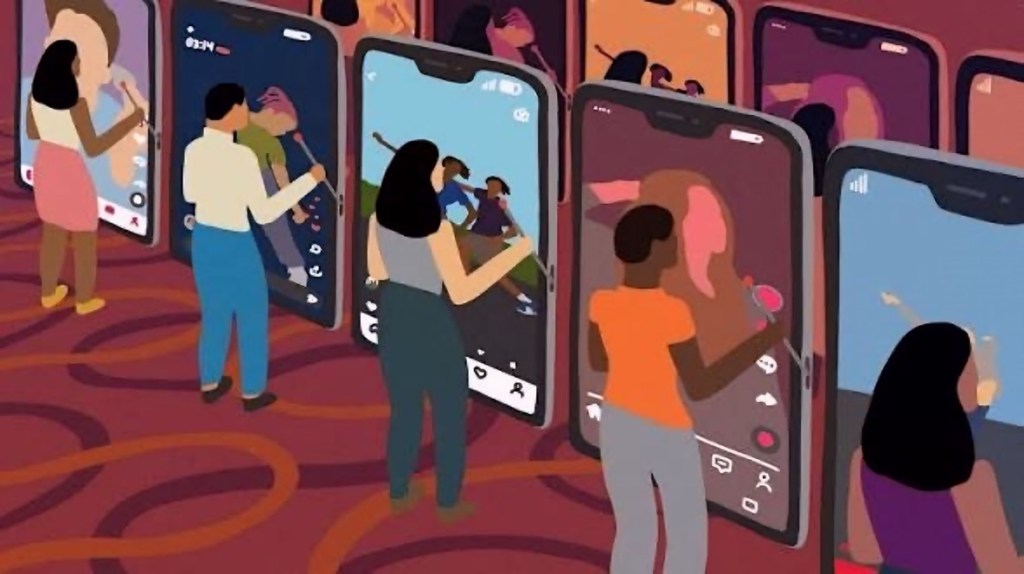
Apart from emotional turmoil, social media’s worst crime is its powerful, deliberate, and insidious addictive qualities. Social media developers cite entertainment and access to information as benefits of joining their apps. However, their primary intention is to keep you on their app as long as possible by taking advantage of our brain’s reward system. The methods employed to hijack our dopamine, including novelty-reward cycles and variable reward schedules, closely resemble techniques used to keep gamblers betting, raising urgent concerns. To better understand, let’s scrutinize the psychological precepts these platforms profit from.
It’s essential to begin with an explanation of dopamine, or at least, a science-lite one. Dopamine is a transmitter and chemical messenger primarily associated with pleasure, reward, and motivation. Each time we participate in a rewarding behavior, our brain releases dopamine. Its function is to increase the occurrence of these activities through motivation. Our drive comes from the desire to repeat these pleasurable feelings, an evolutionary trait that prompts us to seek rewards for survival.
One significant way to trigger the release of dopamine is through exposure to novelty. Humans are strongly drawn to anything new. It’s an evolutionary adaptation, as it promotes the acquisition of information to aid in survival. By using social media, we are fulfilling this instinct by seeking out insight that could be valuable to us. Scrolling through your feed exposes you to incessant new people, videos, and vast swaths of information. Our brain instantly compares these details to our existing knowledge, and if they differ, dopamine is set off. This is called a novelty-reward loop, in use by almost all social media platforms. While learning new things is not intrinsically bad, social media capitalizes on this inclination. Our brains are bombarded with “newness” that is framed as imperative but rarely provides lasting value.
In tandem with novelty, social media sites wield a variable reward schedule. As we scroll, what appears on our feed is largely unpredictable. Notably, the brain has a built-in preference for uncertain rewards, releasing higher amounts of dopamine. Conversely, our brains are more accustomed to predictable rewards, such as the result of brushing our teeth and making our beds—it’s boring because we know what to expect. But social media ensures we are consistently subjected to unforeseen content. Dopamine also spikes more intensely if we don’t know when we’ll receive a reward. When we use social media, we can’t precisely predict if we’ll enjoy everything we see, making it far more captivating to use. Combined with the fact that it’s practically exertionless, just a scroll or a tap, it’s the simplest and quickest way to feel gratified.
Social media applies various additive design features to deliver this fresh and unpredictable material. There’s nary such a thing as only checking social media briefly, as its carefully configured interface lures us in each time. Think infinite scrolling on apps like TikTok. Autoplay forcing you to watch videos until the end. Short-form content being especially digestible = a faster rebound rate = increased consumption. Algorithms are highly personalized based on the topics we’ve shown the most interest in. These characteristics create a pattern of craving, anticipation, and payoff, keeping us hooked without much effort or realization on our part.
When each of these properties is rolled into one, they form a slot machine effect. With slot machines, you don’t win on each occasion but rather unpredictably. The prizes range from smaller cash payouts to a massive jackpot, enough to keep players pursuing successive wins. The pull-to-refresh mechanism on social media sites is eerily similar to pulling a lever on a slot machine. Will you see a relatable meme? A shocking viral moment? A hot take? Read a funny comment? Not everything on our feed will be entirely attuned to our entertainment. Nonetheless, we continue to use it, just for the mere possibility that we may score and discover something favorable to us, akin to gamblers betting again to chase the next win. Both scenarios facilitate compulsive use.
Social media exploits our brain’s yearning for novelty, unpredictability, and reward, mirroring slot machines. The byproduct is an uninterrupted cycle of suspense, expectation, and a prize. The most alarming part is how little effort all of this requires. Our brains are deceived into believing we have accomplished something each time we use social media. Over time, this low-effort stimulation can make us less receptive to real rewards that demand time and energy. Our brain’s reward system is now desensitized to anything that necessitates any more labor than simply looking at a screen, which is where the real trouble begins. In part two, I’ll explore what this means for our ability to develop self-discipline, and how this has greater repercussions for attaining our larger and more long-term goals.
 Emily Writes
Leave a comment